Out for a Walk

I went for a short hike in the high country of Colorado the other day. It has been a magnificent week of blue, blue skies and ever more golden forests as the aspens continue to turn yellow, gold and even orange. For this walk I brought just one camera and one lens- a 35mm f1.8 (the equivalent of a 52mm with the 1.5 crop factor on my Nikon D300s)- and nothing else. I would’ve brought a polarizing filter and a tripod but I didn’t bring them with me from Vermont because this was a teaching trip not a photography trip, or so I thought. A 52mm lens gives the same view as our eyes do- no telephoto effect, no wide angle effect- just a normal lens showing a normal, everyday view. Using a normal lens is a good ‘seeing’ exercise. Going with just one lens is also a freeing experience. Nothing to think about really- no cropping, no zooming, no lens changing- all you have to do is look for compositions. And because it is a normal lens, what you see is what you are going to photograph. The trick when you are out wandering taking pictures like this is to pay attention to what catches your eye. Your eye will catch on anything out of the normal- an unusual shape, color, texture, movement or pattern. If you attend to what catches your attention (and not just let it pass quietly by) all you have to do is decide if it is pretty. If what catches your attention is pretty, take the picture. If it is merely interesting or barely notable, don’t take the picture. I was out for about 2 hours walking up through the still green aspens to the golden aspens in the high meadows above. I took most the shots at f11 at ISO 500. This gave me a shutter speed of at least 250th of a second so hand holding the camera wasn’t an issue. But because I was hand holding I couldn’t do any compositions that required extreme depth of field. (Extreme depth of field compositions require the foreground to be very very close to the camera and therefore a very very small f-stop) Consequently, my foregrounds started at least 10 feet away so I didn’t need an aperture f16 or f22. I took about 40 shots and kept about 10, showing you my favorite 4. I probably won’t do anything with these shots but it sure was fun being out taking pictures for no good reason other than for the fun of it. No heavy equipment bags to haul around, no purpose to strive for, just me and my camera out for a walk. And it sure was a pretty day to be awandering.
Fall Aspens
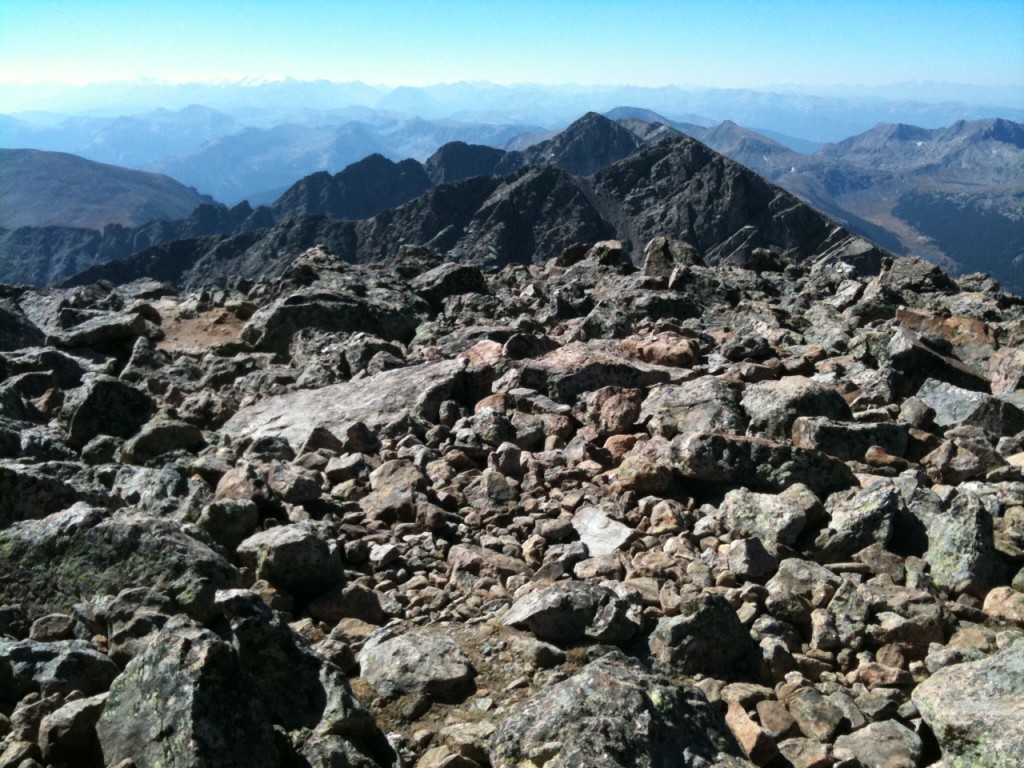
Just finished a photo workshop in Colorado with my great friends Jeff Wendorff and Scott Rouse. The day after Scott and I and my niece Lexi climbed 14,007′ Mount of the Holy Cross- a 12 mile hike with a 5660 feet of vertical ascent. We did it in 10 hours. I’m feeling pretty happy about it all, actually, 14 months after my heart attack. Take that you Bastard! Then the next day we went out to take a few pictures. Fall color is just about perfect here in central Colorado- the days have been blue blue blue, the winds calm and the temperatures mild. What a glorious couple of days. It is good to be outside taking pictures and climbing again. Very, very good.
Photographing Fall Color

Here are some hints on how to get your best pictures this fall. 1. Go out on rainy, misty days- don’t go inside. Fall color will appear the richest, most saturated on rainy days. And yes, your camera gear will be okay. Don’t go out in a downpour but when it is lightly raining your gear will be as comfortable and as tolerant as you are. Also rocks, especially in streams, look much better when they are wet. Stick your camera under a rain coat or in your backpack when you are wandering around but don’t worry when you are using it. Put a small towel in your camera bag if you want to wipe things off. 2. Use a polarizing filter. This is especially important on rainy, misty days. Wet leaves pick up a sheen (the reflection of the white clouds overhead) that diminishes their color. A polarizer eliminates that sheen and lets the true rich color come through. Please don’t use a blue-gold polarizer or an orange-green, purple-puse or whatever polarizer. They are too heavy handed to pass off as anything but contrived and unrealistic. Plus, it is so easy to selectively punch up a color in Lightroom or in Photoshop or Aperture that colored polarizers are (or should be) a thing of the past. 3. Use a lens hood to keep water off the front element of your lens. If you are using a polarizing filter with a lens hood be careful that the hood doesn’t cause vignetting. I solve this problem by screwing my hood directly on to my polarizer (rather than having the polarizer inside my lens hood and impossible to reach). If my lens hood is elsewhere I have often used a baseball cap to protect my lens glass from rain. I’m not so concerned with water on my lens, it is water on the front glass that destroys an image 4. If you are out on a sunny day try shooting backlit scenes. This can really make the color sing. This is an especially good idea if the color is just okay and you are trying to capture a little pizazz. 5. If you want to shoot one of those looking straight up the tree trunk shots(and who doesn’t?) wait for a clear blue sky to do so. White clouds will ruin these compositions. If you get close to one trunk it makes for a good leading line for your composition. 6. Please don’t go out at noon and shoot a scene with HDR and then brag about it. HDR used with pretty light can work great. HDR used when the light is awful is awful- you’ve just gone out and captured all the subtleties of terrible light. If you find Bigfoot and Elvis chatting at noon on a rock and you want to make a poster then fine, shoot HDR but otherwise please don’t. I’m begging you. 7. Don’t just shoot the obvious colorful leaves shoot what you find with the leaves- roads, reflections, milkweed pods, grave stones, fences, spiders, covered bridges, even dead branches. The grey of dead branches can make a very nice counter point color to the bright colors of fall. 8. Drive until you find good color and then linger there. If it is mostly green where you are either go north or go higher in elevation. If if it mostly bare branches where you are either go south or lower in elevation. Any coastal area will be a week behind inland areas for peak color so if you are not satisfied on the coast head inland and north. 9. Cemeteries are great spots to photograph specimen trees, especially sugar maples in New England because the trees have room to spread out. You may get some funny looks but that’s okay, the pictures will be worth it. 10.Don’t use flash, use your tripod, don’t carry every lens you own you only need a couple, walk around whenever you can, ask permission if you want to photograph on private property, limit the caffeine but not the dark chocolate, talk to locals, turn around and see what’s back there and enjoy yourself, this is supposed to be fun!
Tiny
I am often asked where my ideas come from for the articles and books that I do. Sometimes they are the end result of a much thinking and analysis. Other times they just spring fully formed into my small but perfectly formed brain. And still other times they are given to me as a gift, I just have to keep my eyes and my ears open. This was one of those times. Several years ago I was driving through waste Texas from Austin to Tucson. This is a mind-numbingly dull part of the world and on this hot day my mind was particularly dead. Taking a break at a truck stop, I was sitting in an uncomfortable little booth in the café when a truck driver ambled over and sat with some friends in the booth next to mine. He was a very large man with long black hair and seemed to be of Native American heritage, the kind of man his friends probably nick-named ‘Tiny.” What made me pay attention to him though was the fact that when he sat down with his back to me I saw that his shoulders were twitching up and down and I heard an incessant ‘clickety-click’ coming from him. Curious about this, I stood up as if to stretch my legs and in sitting down again back to back with him now, I saw that the movement and the noise were due to the fact that he was knitting! But he wasn’t just pearl one and tuck twoing, he was flying. Those knitting needles were a blur and he had a beautiful and rapidly growing knit square in his lap. Fascinated now with this vision of this huge truck driver delicately knitting away at a truck stop I began to eves drop to find out his story. It turns out that he had a regular route between San Antonio and Tucson and to occupy his time he knit sweaters as he drove. He had boutiques that he supplied in both cities and he used the extra income to buy things for his family. This was too good to let pass by so I took out my little note pad and began taking notes figuring I would eventually weave this into an article or slideshow. Well, it turns out that he was leaving just about the same time I was leaving and as he pulled his rig onto the highway I began to accelerate to pass him. Pulling up alongside him I saw in his large side mirror that, by God, ‘ol Tiny had his forearms through the steering wheel and while steering with his elbows he was knitting with his hands! I was so flabbergasted about this I lost my momentum and had to pull in behind his truck again. Just as I did this a state police car passed me and pulling up behind him I saw that the policeman was seeing exactly what I had seen. He, though, was not nearly as fascinated as I had been. The policeman, with his lights now flashing, got on his loud speaker and called out to Tiny- “PULLOVER!” Tiny did not hear a thing because not only was he lost in his knitting he was also wearing a headset and happily bopping along as he knit. Again, the policeman blasted out to Tiny- “PULLOVER!” and again, Tiny didn’t hear or do a thing. All the while as I am watching this all unfold, I am thinking that this is as good as gold to me, this is great material. For the third time the cop calls out “PULLOVER.” This time Tiny finally notices, takes off his headset and rolls down his window. With his patience now gone the cop issues his last “PULLOVER.” Tiny, now understanding what the policeman wants, finally responds and calls out to the cop: “NO, IT’S A CARDIGAN!” What does this have to do with photography? Absolutely nothing. I just wanted to remind you that every so often in this terribly serious field of photography remember to have a good time and enjoy yourself. You can thank me later.
The Cobacus
“We’ve gotta have a system” Ike says with unusual vigor and exasperation. It is the middle of winter and we are in the middle of the barn in the middle of morning chores doing a middling of work. Time to meddle. “A system for what I ask suspiciously, not being familiar with this sort of energy out of Ike this early in the morning. “A system for keeping track of the number of times the wheelbarrow is emptied outback for the yearlings.” “We need a system for this?” I ask wondering if Ike is setting me up for a prank or to make some obscure point. Both are equally likely. He gets the pranks from his father but he is responsible for all things obscure in his life. “Yes, we need a system!” Ike says pounding his fist into his palm with dramatic flare. “By lunchtime we don’t know if the yearlings have had three loads or four or five so we give them another just to be sure but they are only supposed to get four loads.” Ike continues to pound his fist into his open palm as he says this. He is on one of his favorite soapboxes and he is gaining both speed and volume. I am not sure which soapbox this one happens to be quite yet but I am enjoying the rising fervor in his voice. It could be the ‘we need to be more efficient’ soapbox or the ‘waste not want not’ soapbox or, his current favorite ‘we are spoiling these cows’ soapbox. It is a bit too early in the rant to tell. “A system?” I ask with mock thoughtfulness. “Here’s an idea. How about we ask each other and then add up all the times and see if we come up with four? It’s a difficult system I realize but with some effort I think we all could master the art of talking to each other and adding.” Unfortunately, this penetrating bit of sarcasm is lost on Ike. By the time I get to the end of my suggestion Ike has moved on. This has all been just a prelude to introduce his idea for the system. What I thought was just early morning crazy talk has been a calculated strategy for attention and action. “We can’t ask each other. We’ll forget to ask and even if we remember we’ll forget how many time we did or did not take a wheelbarrow out.” I am tempted to point out that the only choices each of us have are ‘none’, ‘once’ or ‘twice’ and that even for us that shouldn’t be too stressful but Ike has a full head of steam now so I decide to get off the tracks and let him barrel forward. Roger has joined the conversation now curious that his middle son is displaying excitement at 7 o’clock in the morning. He is amazed he is exhibiting anything at 7o’clock in the morning. Ike has mastered the difficult art of sleep-choring. He is physically present in the barn and he does do his chores but he is mentally and spiritually back under the covers in his bed. “What’s goin on?” Roger asks me while studying the person next to me to see if it really his son. “Ike says we need a system,” I respond. “A system? A system for what?” “A system to count the wheelbarrow loads we take out back.” “Couldn’t we use numbers? I hear they are really handy and easy to use once you get the hang of it.” Roger says through a growing grin. Ike has now gripped his hat and is shaking his hand in the air, once again exasperated with his fellow workers. Exasperation usually requires either the hat grab or the hand shake but seldom both. When he uses both Roger and I know that we are getting to him and no matter what else happens this morning we know it will have been a productive day. The fun is just beginning. ‘No, it doesn’t work! This is what we are going to do now.” He says this so quickly and firmly that Roger and I are unable to sidetrack him. This is unusual for us and it means that Ike has come prepared for our nonsense. Ike holds up his right hand and shows us four particularly big pieces of corncob he has found on the floor of the manger. The biggest cob pieces, about an inch long, gain enough momentum blasting out of the silo chute above the feed cart that they often miss the cart and ricochet off the walls in their efforts to escape their cruel 4-stomach death by digestion fate. Ike finds these pieces and tosses them down the manger in front of one of the cats to get them to chase them but today his is hoarding them. The cobs now have a higher purpose. “Each one of these represents one wheelbarrow load. Every time you take out a load you will place a cob marker in this little cranny so we will be able to know exactly how much food we are giving the calves out back.” Roger and I are really suspicious now. This initiative is very much unlike Ike. He never shirks his work but he seldom makes more of it for himself. “Isn’t this more work, Ike?” I ask. “No, it will be less work. Now we won’t be taking unnecessary loads out back. With this system we will only do just what we need to do.” Ah-ha, the soapbox has finally revealed itself. It is the do-the-work-but-don’t-do-any-more-than-is-necessary-so-we-can-get-out-of-here-before-Roger-thinks-of-more-that-needs-to-be-done soapbox. Roger pipes up now, “Oh I like this idea. This will really work!” Roger generally likes any new idea because he knows that his father generally won’t. But with Ike’s idea I think he actually thinks it has value beyond rattling a few shingles off the old man’s roof. Kiddingly, I add, “What would be really nice is one of those
Stepping Through the Seasons
“One of us is tired this morning, but one of us is really tired,” I say to Roger as I walk into the milk barn at dawn. I find him standing in the manger leaning on a hayfork, oddly stationary for this time of the day when there is so much to do. “I know which one I am,” Roger replies. “When did you get back home?” I ask. “Trish and I didn’t get back until after midnight, but it was a good night, we really enjoyed ourselves.” “You worked all day and into the evening, you had a quick dinner and a clean up and then at 9:30 you go out. I don’t know how you do it.” “Oh, I’ll be fine today and tonight, but tomorrow around mid day, it’ll hit me. I’ll be good for nothing. When I’m moving it’s not so bad but as soon as I stop that’s when it hits me. I was moving last night though. It was fun.” There are only a few things that could get Roger out of the house at night. One is a calamity on the farm; that didn’t happen. The other is dancing, contra dancing to be specific. It was the fourth Friday of the month, dance Friday, and Roger and Trish were out the door. Contra dancing, also known as New England folk dancing, started in the 17th century in England as country dancing. It then migrated through France where it picked up some steps from the dances of the French court –Contre Danse– and then sailed to the New World to settled in New England. Contra dancing became popular throughout the country in the mid 19th century but it soon lost favor to square dancing. Except, that is, in the stubborn states of northern New England where it has remained popular to this day. Vermont, New Hampshire and Maine have never been good at following trends. Contra dancing is like a folksy, overly friendly version of square dancing. In contra dancing couples face each other in two long lines and move through the line dancing with all the other couples until at the end of the 5 to 10 minute dance a couple will have met every other dancer on the floor but ended up back with the lady or fella they started with. The music is live, usually Irish or Scottish or American jigs or reels and the progression of each dance is ‘called’ or choreographed by a dance caller. There are no costumes or stylized routines, single dancers are welcomed and encouraged and laughter and gaiety are mandatory, In Vermont, folk dances have been as much a part of the fall, winter and early spring seasons as harvest, splitting wood and maple sugaring. And like these, dances are better done among the community with the help of others. In a time when darkness means the day is over and doors are locked, when families surrender to television or separate to their own cyber-companionship dances bring people together. Perhaps it is the inherent isolation and hardness of winter when roads are difficult and temperatures are worse that forces people to seek out the company of others to stay reasonably sane. Or perhaps it is just the dogged stubbornness of New Englanders who refuse to let a bit of a blizzard keep them from their pleasures. Whatever the reason, if it is the season, Roger will be dancing. He comes by this honestly. “We used to go dancing all the time,” Hugh tells me, his voice suddenly animated. “We’d dance in the basement of the church, at the Tinmouth dance hall on the pond, wherever we could. We used to walk a mile and a half down the road to the east and the people would clear out the bedrooms and we’d dance upstairs.” “When did you ever have time to dance? Your father was pretty strict I hear.” “We’d leave the farm around 8:30 after milking and started dancing around 9 or 9:30. We’d finish at 1 and be back in the barn for milking at half past 5. I was always here for milking.” “I bet you were. You still are.” “There was a German girl in town –Ooshee we called her, her real name was Ursala. She was a real nice woman and a helluva dancer. I’d meet her at the dance and soon enough her husband would get drunk. Then she and I would dance all night- we had a helluva good time.” Hugh doesn’t dance anymore, at least not with his feet, but I am sure he still dances in his dreams, looking for Ooshee and space on the floor. It’s an earlier dance Friday and I go to out to see what this dancing is all about. I find Roger on the dance floor, washed, shaved and beaming like a brand new penny in a pocket full of old change. I can’t remember if I have ever seen him without any hint of the farm on him. Dare I say he looks normal; a dairy farmer in everyday day camo. The dance is help in the Tinmouth Community Center, a beautiful building with a hardwood gym floor and a portable stage at the far end for the caller and musicians. Two basketball rims and backboards hang from the walls and a kitchen with iced tea, cider, cookies and brownies clustered on the counter. There is no price on any of the goodies just the request for donations. Most of the people seem to be locals dressed in blue jeans and baggy sweaters and long flowing skirts for the ladies. Ages range from 7 to 75 and there are a surprising number of young folks; older teens that are doing something so uncool it is cool. Four musicians sit up front- a violin, a squeezebox, a mandolin and a guitar- the reels are rousing, the jigs joyous. When I first watched a contra dance it appeared
Farmer
Roger Bromley is a dairy farmer, been so all his life. Roger’s father, Hugh, is a dairy farmer, been so all his life. They farm together, done so all of Roger’s life. Roger’s grandfather, Delos, was a dairy farmer, was so all his life. Roger’s great-grandfather, Martin, was a dairy farmer, was so all his life. Delos farmed with Martin; Hugh farmed with Delos. All in all, four lifetimes, 162 years, have been spent milking cows and doing chores, being dairy farmers, on one, old 628-acre hill farm in Danby, Vermont. Not much has changed over the four generations of Bromley farmers. Tractors have replaced horses, automatic milkers have replaced hand milking and every other day a milk truck now comes up to the farm to get the milk but the cows still go out to pasture every decent day, the barn still stands where it always has and the summer grass still grows thigh high. “I like my independence,” Roger says, “being my own boss and my own worst employee. I like having plenty to do and not enough time to do it and knowing that it will somehow all get done. But most of all I like the variety. Yeah, Trish and I milk cows everyday, twice a day the whole year through but even milking’s not the same every day. How could it be when your 100 business partners aren’t any smarter than that old stump over there?” “But who’s the fool, them or me?” Roger says taking off his grimy hat and scratching his sweaty head. “I know every day is going to be different. Every day there’s a problem or ten to solve, or at least try to solve, keeps me busy. Sometimes it works, sometimes it doesn’t but what is the worst that could happen?” He looks around and returns with an evil twinkle, snickering. “Maybe someday I’ll wake up and all these cows will be gone! Wouldn’t that be something?” The truth is he wouldn’t know what to do…once he had danced a short jig and whooped and hollered for a bit. “I just don’t know what else I’d want to do, not trained to do anything, really. Milking’s the easy part. I mostly fix things- flat tires, broken fences, mower blades, silage unloaders, culverts, tractors- there’s really not much around here that doesn’t need some fixing and that includes me! I do a little work, eat a good meal, go to sleep and start a new day. Doesn’t sound so bad and I’m not in an office all cramped up. Couldn’t do that, not for me.” When it comes down to it, Roger is and forever will be a farmer. He never really had any choice, it’s something that chose him. “Everything I need is here,” Roger says looking past the old barn and over the barnyard full of cows to the pastures slipping down to the forest edge. “I’m happy right here. It’s just me and the wind and the rain and them cows over there. Every one of them is plotting now on how to do something to screw things up and every one of them eventually will. But I’m just stubborn enough to stick around and see what happens. And since I’m standing here I might as well get to milking. Wanna help?”
Driving the Bus
A true story: For many years I lead polar bear photography tours in Churchill, Manitoba, on the coast of Hudson Bay. Churchill is an odd little frontier town that, before they realized they could make money off the autumnal polar bear migration, was the end of the rail line for grain shipments from Canada’s Prairie Provinces. When I was in Churchill the tourist industry was hauling in lots of bear-watching dollars but the Port of Churchill was in steady decline. Less than a dozen ships came to Churchill to load grain and then head north out of the bay. One year I was up in Churchill for three weeks leading tours and coordinating other tours. Leading tours was easy because polar bears are appallingly photogenic. Coordinating the other tours in town was also pretty easy and involved mostly grocery shopping and driving a big school bus full of bear-watchers on daily rounds to and from the tundra buggy parking lot 15 miles out of town. The hardest part was keeping myself amused during my off time because there is only so much you can do in Churchill in November without a polar bear as a friend. For all the years I led polar bear tours a visiting artist was also there who became a fun friend to hang around with. Her name was Olivia Summers and she made beautiful pen and ink drawings of the bears and the native children and sold them to the hordes of visiting bear watchers. But the most outstanding thing about Olivia was that she was a tall, striking, southern belle-type lady that could, with a flutter here or a coo there, get any hot-blooded male in Churchill to do anything she wanted. By the way, all the males in Churchill were hot-blooded. To say the least, she was not the kind of woman you normally saw in Churchill. I don’t think Olivia ever paid for a meal and she was never lacking hot-blooded company. Olivia didn’t wield her wiles maliciously just opportunistically and once you were on to what was happening it was an interesting game to watch and occasionally promote. On one of my free days Olivia came by and asked if I would be her chaperone for a few hours. Apparently, she had lunched (gratis) with the captain of the last freighter in port and had been invited to take a tour of the ship. The ship was from Estonia and was crewed by 40 or so lonely Soviet (at the time) sailors that apparently needed their fantasies refreshed. Knowing that Canadian Customs kept the crew on the ship and the locals off it and knowing that it was illegal and in violation of several international laws, Olivia had kindly invited me to accompany her on her private tour. How could I say no? The tour of the ship, as you might imagine, was a howling success. There was a lot of attention given (none to me) and I spent most of the time in the wake of the captain and Olivia. He escorted her around like a big ‘ol rooster much annoyed by the presence of another rooster (that would be me) in his coop. As we were leaving and as more invitations of various kinds were being extended to Olivia, and not me, I realized, in a blaze of insight, that I had something that Olivia did not. I had a school bus! And without further thought, I invited the captain to take an unauthorized spin in my big yellow bus in search of big, white bears. With Olivia implying that she would love to go along, he enthusiastically accepted. We had a date- the captain, Olivia, a polar bear and me. A hour later I pulled the bus up to the ship ready to take the captain on a quick tour of the surrounding tundra in a completely unrealistic attempt to see a polar bear. You never saw bears anywhere near town; they were either picked up and detained or scared away to keep them away from people. The bears we photographed were a hour tundra buggy ride outside of town. But the captain didn’t know this and he was excited about seeing Olivia and the countryside, in that order. After going up and finding the captain and telling him his bus had arrived we headed back down to the bus. When I stepped into the bus, much to my surprise, I saw that it was full of the entire ship’s crew. I also saw that much to the captain’s surprise Olivia was not among them. This wasn’t going to be a private tour with the dashing captain and his exotic belle. Oh no, this was going to be an American guy taking 40 trespassing Estonians and a case of vodka on an unauthorized and illegal tour of a foreign country in search of the largest land predator in the world. By now it was too late to unload everybody so off we went with my head reeling with calamitous scenarios. Headlines, in bold type, started flashing before me- SOVIETS MAULED BY BEAR–AMERICAN JAILED or SAILORS JUMP SHIP –AMERICAN DRIVES GETAWAY BUS or SCHOOL FIELD TRIP TURNS UGLY-POLAR BEAR SEXUALLY ASSAULTED or HANDSOME CAPTAIN STRANGLES TOUR LEADER – SOUTHERN BELLE COOS. With my imagination now fully in control and all rational thought abandoning me, I drove 40, very happy, very boisterous Estonian citizens off into the Canadian tundra. (‘Tundra’ by the way, is one of only two Russian words I know. It means ‘land of little sticks.’) I drove to all the least likely bear spots I knew thinking that a bear/sailor interaction of any kind would not be in my best interest. At each stop the sailors all piled out, puffed on their cigarettes, took a long shot of vodka, looked around and, eventually, piled back into the bus. I spent the time pretending to look for bears and being so sorry for not finding any. As
Giants in the Forest
The directions to drive to Crabtree Lake are to just follow Crabtree Creek upstream until it stops flowing. The problem is that the approach is via a snarl of logging roads that pay no heed to topography or logic. I remember the route as straight-left-straight-left-straight but its been a few years since I have been there and all that might be left, might be right. At least there won’t be any question once you finally do get there for Crabtree Lake is a beautiful little sapphire pool enveloped by a towering emerald forest. And from the ridge behind, the glittering diamond peak of Mt. Jefferson rises above. Stand on the edge of Crabtree lake and you are surrounded by all that is the Pacific Northwest. All jewels in the crown of the Cascade ecoregion. The Cascades extends 500 miles from southern British Columbia through the mountains of central Washington and Oregon to northern California. It is the northern part of the western mountain rim that, with the Sierras, shields the interior west from the full wrath of Pacific storms. The rainshadow that is thus cast is responsible for the high desert dryness of the Great Basin and the intermittent rains of the Palouse grasslands of the Columbia Plateau. The rainshadow of the Cascades is felt closer to home as well. A few miles east of the mountain crest moisture is diminished to the point that Rocky Mountain plant species such as ponderosa pines and junipers, adapted to long periods of drought and frequent wildfires, are common. On the other side of the crest, the mountains are drenched by rain wrung from the clouds of Pacific storms, keeping the forest lush year-round. Some areas of the Cascades receive more than 45 feet of snowfall a year, enough to entomb a three story house with a bit left over for the chimney. The Cascades are the volcanic crease of the continent, a line of a dozen or so snowcapped volcanic peaks that dot the verdant forestscape like a string of pearls on a woolly green scarf. The notoriety of the mountains varies from the well known to the not so. But to the people of the Northwest the mountains are the hook upon which the landscape is hung and their gaze is cast to them to check the progress of each day. The north to south roll call of these volcanoes reads like a mountaineering romance novel: Mt. Giribaldi, Mt. Baker, Glacier Peak, Mt. Rainier, Mt. Adams, Mt. St. Helens, Mt. Hood, Mt. Jefferson, the Three Sisters, Mt. Thielson, Mt. Shasta and finally Mt. Lassen. Each has a century and a half of written history that is part heroic, part mystic and part catastrophic. And each has a millennium or more of oral history that is woven so tightly into the traditional fabric of the Northwest that the line between faith and fact is widely blurred. Going back several million years finds the volcanoes of the Cascades were mere bumps, just rising plumes of magma in the earth’s crust. Generated by the melting of the Farallon tectonic plate as it dove under the North American plate, the magma eventually broke through the crust and built with many eruptions the mountains we see today. The boundary between the two plates is the west coast of the Pacific Northwest which is also why the volcanoes so neatly parallel the shore. The point on the coast opposite Mt. Lassen in northern California marks an important geologic convergence. It is the southern boundary of the oceanic plate and all that is considered to be of the Northwest and the northern boundary of the San Andreas fault zone and the beginning of the Sierras and the rest of that that is Californian. Most of the Cascade volcanoes are dormant and some are extinct but because the tectonic plates are still in motion others are active. The most well known eruption in North America was in 1980 when Mt. St. Helens blew apart and hurled a cloud of ash over all of the Northwest and west to Oklahoma and Minnesota. Before that, Mt. Lassen erupted in 1917 and Mt. St. Helen erupted twice again in the mid-19th century. Until the plates stop moving, which will happen as soon as the moon stops rising, all that is alive in the Cascade ecoregion will live with the potential of someday having an ashy cloud hang overhead. In the year 6845 BC many people, animals and plants felt the earth move in the greatest volcanic explosion ever in the Cascade ecoregion. That is the year when 12,000 feet tall Mt. Mazama blew apart in such a thunderous and violent explosion that ash fell as far away as Alberta and Yellowstone National Park and 25 cubic miles of mountain disappeared. Another 15 cubic miles of material collapsed back into the blast crater, a hole five miles wide and almost a mile deep. Today this hole is filled with 1900 feet of water so clear that objects can be seen 300 feet below the surface. The area remains volcanically active, a new volcanic peak is rising from the rubble and has broken the surface of the lake. The new cone is called Wizard Island and the water is Crater Lake, the namesake of the National Park. Even stately Mt. Rainier is not the unchanged giant that our human perspective suggests. Seventy five thousand years ago it was more than 16,000 feet high, 2000 feet higher than it is today. Six thousands years ago the mountain erupted and was reduced to a cut-off cone not quite 14,000 feet high with a lake in its summit caldera. Reconstruction of the mountain began 2500 years ago with a dome of lava rising from its summit to its present 14,410 elevation. Today it is the signature mountain of the Cascades, cloaked with 26 glaciers that cover more than 40 square miles of mountainside. If the spirits of the Cascades live anywhere in the Northwest it is
Bernard General Store
The Hub – Kim Furlong, Storekeeper Kim Furlong has a single string tied around her left wrist. The string symbolically connects close friends in a circle of support and promise for a friend about to give birth. “When the child is born we will all cut the string together. It’s a way of celebrating a new beginning. I should’ve put one around this store years ago.” Kim, along with her partner, Carolyn DiCicco, own and operate the Bernard General store in the Northeast Kingdom of Vermont. “We don’t so much operate it as we run it, or it runs us, doesn’t matter, there is a lot of running. In the summer it is a 3-month sprint, for the rest of the year it is a marathon but we never stop moving. After 10 years of dreaming about buying this store and 18 years of owning it we are getting tired of all the running.” Being a general store shopkeeper means you are on your own most of the time. There is no field office to call, no mother ship for support. It’s just wits and wiles, 24/7. You are the plumber, carpenter, marketer, event planner, late night opener, all day listener, janitor, purchasing expert, financial guru and wizard of all things necessary for a disperse rural community. “I’m not saying it hasn’t been hard. We devoted 18 years of our lives to this store- lived upstairs, worked downstairs, raised our families here. Now we are just about done emotionally; this last year has been very difficult. We have no line of credit anymore; it’s amazing we kept it going this long. Without the support of the community we never would’ve. We give it our best.” With an 8-stool soda fountain in the rear of the store and Tuesday burger and Saturday live music nights, the store is the social, economic, political and in many ways, spiritual hub of this little village on the shores of Silver Lake. But a general store doesn’t just sell merchandise; a shopkeeper doesn’t just keep shop. A general store stocks its shelves with the needs of the community while a shopkeeper spoons out the nourishment to sustain its heart. “We’ve seen kids grow up and graduate and come back again with families. We’ve had births, deaths, weddings, divorces. Broken ankles, broken hearts, they all pass through this store. You come in a stranger and you leave a friend. That’s just the way it is. We wouldn’t have it any other way.” “It was the community that attracted us, the community that we fell in love with, the community that supported and sustained us, the community that rallied around us. We fed the community as much as the community fed us. But eventually we all lost our appetites. The community is shrinking; some locals can’t afford to live here anymore and with specialty stores and giant grocery stores a short drive away it’s near impossible to keep it going anymore.” Today the Bernard General Store is closed for the first time in 180 years. Kim and Carolyn are adrift, unsure of where the next wind will blow them. Kim cut the string on her wrist just last week.