Photographing Winter

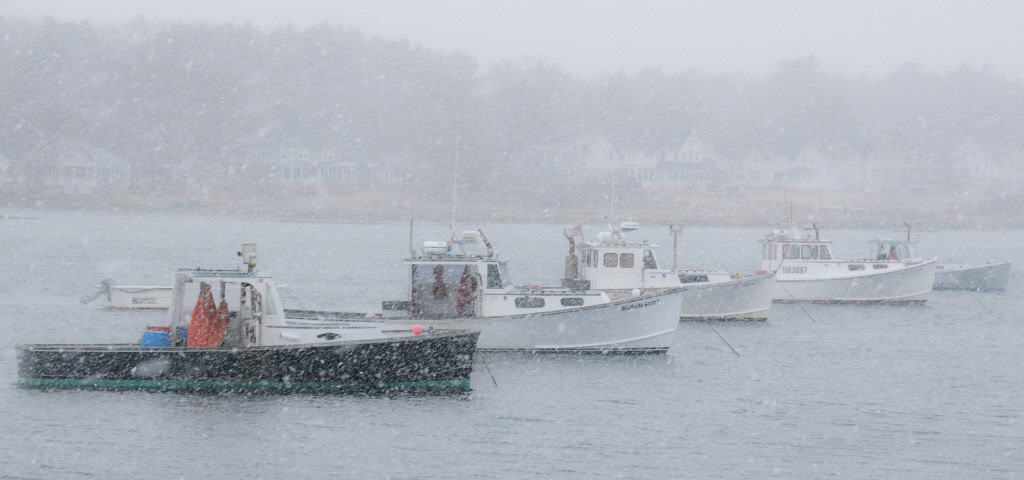
Time for the annual ‘How to Photograph Winter’ report, something that is written every year and the same thing is written every time. So lets get the obvious suggestions out of the way with little else said: it’s cold so wear warm clothes- hat, gloves and boots; don’t take your camera from a warm humid place to the cold, dry outside. It’ll fog up and you’ll be unhappy; Beware of contrasty full sun scenes and check your histogram religiously; footing is tricky so be careful where you walk. Now that the obvious stuff is out of the way here are some less obvious but probably more important suggestions to get your best winter (and I mean snow) photography. 1. Go out while it is snowing. Use a lens hood, keep your camera tucked under your parka, pay attention where you walk but go out. Your camera will be as tolerant to the conditions as you are so don’t worry. Going out while it is snowing or blowing makes for great pictures- ones others are unlikely to have. 2. Be very careful using your tripod in snow. This is what can happen- you extend the legs, separate them and then plunge the tripod into the snow. What happens is you’ll have a bi-pod in one hand and a mono-pod in the other because the snow will force the legs even farther apart, past their breaking point. The solution is to not pull the legs apart very far so when the tripod is thrust into the snow the spread is not so costly. 3. Be aware of your path as your wander around in the snow, it can be a great compositional element for your image. Whenever I am out and I see a nice area ahead of me I will walk deliberately to make a pleasing path. Snake around some trees, play with a fence, crash through a drift- be playful. 4. Be aware of shadows as well. If you go out on a cloudy bright day (my favorite light for snow) there are always great shadows especially late and early in the day. Sometimes the shadows can be a nice foreground and sometimes they can be the entire composition. Shadows and your trail are even better together! 5. Steams are great in the winter. Early winter the water is open but the banks and surrounding areas are all snowy making for really nice pics. Later in winter the stream becomes more and more covered with ice and snow. There are often very pretty snowy pillows on rocks and magnificent icicles and ice plates on the edges of the open water. 6. Don’t forget the human environment and humans too! Barns, fences, wood piles, gardens, all look great when covered by snow. People are also, I think, more photogenic in winter when they are all covered up in heavy clothes and their expressions often match the weather at the time. Kids having fun in the snow make for great action shots. 7. If you can’t find winter (snow) here is a trick I have used a number of times. Go to a ski area and ride the lifts to the very top where winter is likely hiding. Ski areas charge relatively little for a non-skier to ride the lifts. Bring along snowshoes and stay out of the way but you should have the entire mountain top to photograph. If you live near a ski area watch the weather and try to wait for a time when the summit trees are heavily flocked with snow. Oh, you don’t have to walk down. You can ride the lift back down just like you rode it up. 8. And don’t forget animals in winter. Birds at birdfeeders are great subjects for winter photography. Put up a photogenic perch near a feeder and if you have more than one feeder up take them all down so birds are forced to go to the feeder you want and to your perch. Focus on the perch, be patient and you’re good to go. Also, mammals look great in the cold months because their pelts are the thickest and most luxurious looking. Triple D Game farm is the place for the best winter mammal photography- snow leopards, raccoons, wolves, mountain lions. What are you waiting for? [nggallery id=31]
Holiday Happies

Holiday Happies to one and all!!
2013 Workshop Schedule
Well I have finally gotten my workshops for next year figured out. You can find brief descriptions on my website for now, more detailed information will be posted shortly. Here is my thumbnail 2013 workshop schedule: May 21 – 26 Pacific Rim National Park, Tofino British Columbia June 23 – 29 Thinking Like a Pro, Manchester, Vermont July 17 – 21 Oregon Coast, Newport Oregon October 9 – 13 Fall Color of Vermont, Manchester, Vermont October 16 – 20 Fall Color of the Maine Coast, Acadia NP, Maine November 6 – 10 Death Valley, Death Valley NP, California My website has contact and price info. Please contact me if you have any questions.
All About the Light
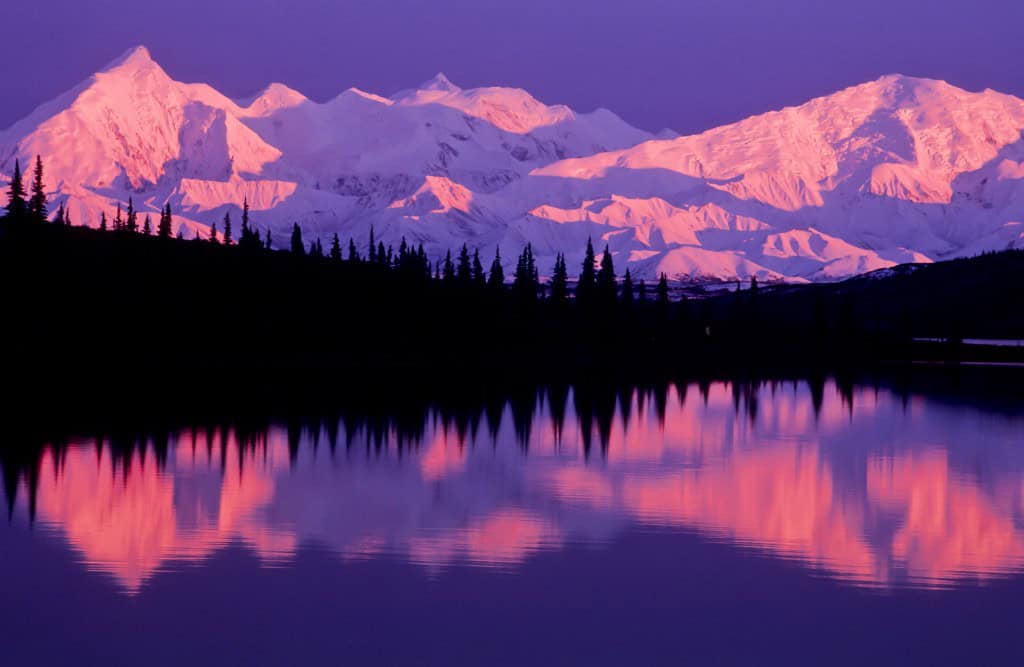
I recently did a 3-day drive from Vermont to Colorado to be in the Rocky Mountain snow for the holidays. I know, I know, there are airplanes that will do the same trip in just a few hours but I like driving across our country and reacquainting myself with the ever-changing landscape. Three days in a car gives one a lot of time to think and while most of my thoughts were just a wee notch above idle some actually were worthwhile. The best of these was the realization that photography is all about the capturing of light and the better the light the better the photography. I know, I know, you have all heard this a gazillion times before- blah, blah, blah, light, blah, blah, blah, photography. And yet we all forget about it as soon as we grab our cameras. Don’t believe me? How many times in the past year did you photograph something ordinary in beautiful light versus how many times did you photography something beautiful in ordinary light? I am pretty sure that we all spend much more time photographing beautiful things in ordinary light. And what is the result? An ordinary picture. I don’t care how beautiful your subject is if you photograph it in ordinary light the photo will always be ordinary. For 30 years I have saying “dull light equals dull picture” just as ordinary light equal ordinary picture. But beautiful light? Photograph anything ordinary and you will get a beautiful photo. It may not be the best composition, that is up to you, but it will be a beautiful photo. This really hit home to me when I was driving just after sunrise and just before sunset. Didn’t matter where I was- city, suburbs, farming fields, rest stops- with the beautiful light the world before me was beautiful. So here is my challenge to you for this coming year- instead of seeking out beautiful subjects or locations try seeking out beautiful light. Chase light, don’t go around chasing subjects. Chase clearing storms, chase twilight, chase light misty days, chase the warm light early and late in the day, chase light snowy days. It doesn’t really matter where you are or what you are photographing during these times it just matters that you are out there trying. It’s all about the light.
A Plea
This is an essay from my friend Brenda Berry. I am sharing it here because I think it is important and beautifully written. Please indulge me and read it. It’s past time for me to do another blog post, maybe one of those ubiquitous year-end lists, or something about photo highlights of 2012, but in light of the shootings in Connecticut it all feels silly or pointless right now. Like most of you, I am feeling gutted with sorrow and frustration. I can’t imagine a Christmas with presents wrapped and now forever waiting for a first grader who will never have the joy of opening them. A child, just barely past babyhood, shot for no reason, no reason at all. Some say the best thing to do is to hug your own children, and certainly I will do that, but how do I hold my own without feeling the unspeakable pain of those mothers and fathers who’s children lives were cut short in the worst way possible? We shouldn’t feel lucky in our own particular good fortune, we should feel outrage that as a country we continue to allow this to occur over and over again. We should feel disbelief that a lack of political will and cowardice will ensure that mass shootings will continue to happen over and over again. I don’t know about you, but I had a notice from my children’s school about how to talk to them about the tragedy – how to reassure them, and how to answer their inevitable questions. Really? There are no rational answers and no blanket reassurances to offer. As is often the case, our children are smarter than we are, and my own children’s questions were pointed and insightful. My eighth grader, who is co-incidentally studying the constitution right now, wants to know how this “obvious misinterpretation of the second amendment freedom has been allowed to trump freedom of life, liberty and pursuit of happiness”. We talked about the term “arms”, and how 200 years ago the term meant arming a militia with single shot rifles or muskets, and how unlikely it was that the framers of our constitution meant for mentally disturbed young men to have easy access to military grade firearms. My sixth grader wanted to know if “arms” might eventually be taken to mean hand grenades or bombs, and if not, why not? Would the adults in his world be smart enough to see the absurdity of allowing that, and if so, then what about assault weapons? My sixteen year old astutely observed that the same people who are so desperate to save the life of one unwanted embryo seem to care very little about what actually happens to most children once they are born. Sure, someone tell me how to talk to my children about the complete moral failure of their parents and grandparents to set reasonable limits. Please, by all means tell me how to tell them that the reality of going to school, or the movies, or the mall, could mean death at the hands of random fate, and that is the price we pay for the so-called interpretation of the “right to bear arms”. Have I ever personally shot a gun? As it turns out, yes I have. I enjoy skeet shooting, and sport shooting at clay and paper targets. I appreciate that sometimes hunting is a means to an end. I feel that with the proper training and safety procedures there can be a legitimate place for private ownership of guns. However, I do not see why a weapon made for wartime – and the wholesale slaughter of human beings – should be easily available to the public. I will never understand the vocal NRA crowd for whom all weapons are sacrosanct, and the “right” to own them trumps the right to life, education, healthcare and public safety. Don’t give me the bullshit line, “guns don’t kill people, people do” – and if that is your stance, then fine, then let’s make it a little harder for the insane and violent people among us to get ahold of these weapons. And here is a really radical idea, let’s take care of the mentally ill and distraught people in our communities, those “people” most likely to use these weapons to take innocent lives as well as their own. It should be at least as difficult to acquire a firearm as it is to adopt a dog. My fear? My fear is that we will all once again be very very sad for a very short period of time. That good people will shake their heads in sorrow and disbelief and finally when they can’t stand the pain anymore will turn off the TV, turn the page in the paper, and begin the active process of forgetting. We Americans have short memories, and our sense of futility overwhelms us. We are far beyond needing meaningful dialogue. What we need are leaders who actually lead, and we desperately need President Obama to step up and become the leader we hoped for. Tears of compassion are fine, action is better. Perhaps Elie Wiesel said it best, “ all that is needed for evil to flourish is that good people do nothing”. Let us not be those people. When your children and grandchildren ask you why – why did you allow this to happen – and somewhere, once again, a mother screams in unbearable agony, “why… why…. why….” in your heart, you should also ask yourself, why, indeed.
Twilight

Tis the season when our thoughts turn indoors and sugar plum fairies dance merrily on our photoshop keyboards. We really can’t be blamed. It’s cold outside! For the northern half of the country going outside during the pretty light of dawn and dusk means braving finger-freezing temperatures and turning our toasty tootsies to ice. For the southern half of our country who only thinks it is cold outside the end result is the same- hot chocolate, anyone? So here are two strategies to be productive when it is cold outside. First stay inside and go through all the images you took this last year and toss out half of them. Then do it again and toss out half again. Then select all your favorites and toss out everything that is left (or right) of those. You haven’t shown anyone those lesser images have you? Of course not, you only show people your best ones. So why are you keeping all the others? Ballast? Your computer doesn’t need ballast, like a teenage girl it needs space. You’ll feel better afterward, I promise and your computer may even talk to you at dinner! The second thing to do when it is cold outside is to photograph at twilight. You can do this when it is warm outside as well but the advantage when it is cold is that you can usually do it from your (warm) car or at least next to your (warm) car. Twilight is the time when it’s not quite day and it’s not quite night. I define it as 30-40 minutes before sunrise and 30-40 minutes after sunset. The reason twilight is such a specific time is because a very specific thing happens at twilight that doesn’t happen any other time of the day- the sky turns a beautiful deep cobalt blue. The blue is actually the shadow of the earth projected on the sky opposite the rising or setting sun (to the west before sunrise and to the east after sunset). Much later that 30-40 minutes the earth’s shadow is absorbed by night and the cobalt blue disappears. Also, during twilight there is just enough light for the outlines of buildings and boats and trees, etc to separate giving definition to your photograph. This is how you do it. Find a location with some lights on- harbors are great, skylines, village greens, snowy cabin, monuments, city parks. Find your composition with your back to the sun in other words, with your back to where the sun is about to be (sunrise) or just was (sunset). You’ll probably need a tripod or some kind of support because the shutter speeds are to long to hand hold. Set your camera to matrix or evaluative metering (reading the entire scene) and set your autocompensation (that little +/- button) to minus 2 or even minus 3. This is important. If you don’t do this you will not see the deep cobalt skies and you’ll write me a nasty note telling me what a numskull I am and then I will respond reminding you to do this in a less than charitable tone and then you’ll feel like an idiot and I will feel like a shmuck and you’ll give up photography and I will take being nice lessons which won’t stick and I’ll start drinking and growing chest hair and join a traveling heavy metal band as a roadie eventually ending up on your doorstep with my ten best mates and you’ll have to be nice to us because you are feeling so guilty for not following my directions fully. Where was I? Shooting at minus 2 or 3 autocompensation means you are underexposing the scene. In so doing you are actually forcing your camera to render the scene as it actually is and not lightened it up as your camera wants to make it. Underexposing brings out the deep cobalt sky. If you don’t underexpose the shot the sky will be a bland, blah gray. Professional travel photographers use this strategy all the time to get great shots. The secret is that it works, the cobalt appears, no matter the weather. It could be raining, cloudy, it doesn’t matter- put your back to the sun, shoot at the right time, underexpose and viola, magnificent photo! So at this time of year drive around at twilight and find some beautiful holiday lights with a nice clean background. Photographed at twilight the image will show lots of definition. If you do it at night the image will just be some little dots of light on a black background. then you will show this to me and tell me what a numskull I am and I will..oh, you get the picture- if you shoot it at twilight!
Inside a Church?
I know, it’s not my normal habitat nor is it my normal place for photography but sometimes you just gotta let all your rules go and and go have some fun. These are from inside St. Peter’s Basilica in the Vatican. St. Peter’s is the biggest church in the world…by a huge amount…and it is where the Pope hangs. The Basilica is beyond (just filling in any superlative here) (and then amplify it by an even gazillion) (and then apologize because you are not even close). Realize please that this has nothing to do with religion for me but everything to do with architecture and art. And lots of WOW!! The point of this posting though is not how amazing St. Perter’s Basilica is but rather how much fun it is to take your camera into places you never have before or might not even consider appropriate for photography. My friend Rudy takes wonderful images at dance recitals. At first he had no idea what to do taking pictures inside but he tried and fiddled and is now under hire by the facility and producing beautiful shots. You might as well try, there is nothing to lose. Take your camera into a barn, a factory, a lighthouse, an old shed, an attic, an art studio, a silo…get the idea? Have some fun, see what you get. You may be surprised.
Arthur Cooper
His name was Arthur Cooper, although it seemed most people in the bar called him simply Cooper. He was an older gentleman, in his 90’s I figured, dressed as a solid New Englander- a checked, button down, LL Bean shirt with a beige cardigan and worn brown slacks- neat but nothing fancy. You would call him natty in his day but his day was mostly passed and his clothes sagged on him now, a size too big on a body a size too small and shrinking. I guessed it was a familiar outfit, something he had been wearing without variation for years, something he didn’t change in a world that constantly did. And I guessed he was alone, and had been, for longer than he liked. He walked without a cane, his voice was steady, his stance strong and as he walked up to a barside table next to mine I watched as the regulars nodded and greeted him, smiling. He sat by himself, quietly, scanning the bar, waiting for a chance to be one of the crowd. He wore glasses, his hair white and I couldn’t take my eyes off him. What brought him here all by himself? Had he lived here all his life or was he just passing through? And what did he do in his day? I was drawn to him, this elderly man, strongly so, oddly so. You see I never approach strangers, never talk to people I don’t know. I leave everyone pretty much alone and I’m happy when they do the same with me. I am pleasant when I have to be but certainly not convivial with strangers always preferring solitude to inclusion. But with Arthur, a stranger, I reached out in this most public of places. Why? I think it was because with Arthur I knew there was more. With Arthur, I just knew he had stories. As I finished my food two stools at the bar opened up. He gathered himself and took one and I gathered my courage and took the other. “Hi. How are you doing? My name is David, David Middleton.” “Hello. Arthur, Arthur Cooper. Pleased to meet you.” “Pleased to meet you, Arthur. He shook my hand firmly and took a sip from a small glass of red wine. As the crowd swayed with a new surge of people wanting drinks while they waited for their tables I leaned in closer. He stared ahead, past the bar and into the mirror as if he were looking for someone in the reflection. We exchanged the usual pleasantries, the weather, the town, how things had come and gone. I felt there was more and I knew from his age he was anxious to tell. The elderly have friends but they don’t have cohorts, no one who knows what’s it like. They are the past living in the future and there is no one in the present who understands or even, if they are alone, who cares. I paused, knowing that stories only come with patience. I didn’t know Arthur, had never met him before but he was an old man and my experience with my 95 year old friend Hugh on the dairy farm told me that old men have stories they want to tell. If you wait, if you are sincere and if you listen, really listen, the stories will come tumbling out. “I came up here after the war, I was 33. A friend asked me to help out at a boy’s camp and 30 years later I still was. Met and married my wife up here. Bought the house next door to here. Raised two kids. They are gone now, don’t see them much anymore. My son lives in Virginia, my daughter in Tennessee. I have grandchildren but I barely know them. They haven’t been up for a visit for some time. My wife died 10 years ago and I have been alone ever since. I help out at the afternoon tea here everyday but I’m not much good for anything. I go home, have dinner, come back here, have a drink and then go back to the house and go to bed. Not much changes, its pretty lonely over there. That’s why I come over here. Company is hard to find at my age.” “I knew a man just like you, Arthur. He was a 95 year-old dairy farmer in Vermont where I live and I went over to his farm every morning so I could to help out. Got to know him pretty well over the years and he would tell me the same things. He was surrounded by people but he felt alone. He had no one to listen to his stories.” “He must have been in the war. I’m 95 as well. We all were. I was a bombardier in the Air Force, got shot down over Germany and spent two years in a German prison camp. Was bad but wasn’t so bad. They treated us about as well as they could, we got mail from home, enough food, took care of the sick. The Germans aren’t bad people. The major brought the plane down in a farm field, all 12 of us survived. Now that was good flying! We didn’t get very far, the Germans were right there and before we knew it we were all in the camp. It was quite a shock.” I looked at Arthur, this 95 year-old man, cradling his glass of red wine as he carefully cradled his memories. Nothing appeared extraordinary about him- he was more likely to be overlooked than noticed- and yet he had lived through an extraordinary period of history and had extraordinary stories to tell. If I had had a hour, a day, a week, a month to spend with him he would’ve told me stories day and night. As it was I had 20 minutes in a crowded bar with him but it was 20 mesmerizing minutes and my
More from Venice
It was a dull and dreary rainy day here for most of the day. when the rain finally stopped it was simply dull and dreary. but I am in Venice so I went out and took some shots and then played with the windows of Venice. Nothing original about any of this but it occupied me and forced me to look at more of the details of the city than just the canals and gondoliers. None of these pictures individually are very exciting but when viewed together as a kind of window mosaic I like the visual effect. I didn’t look for any particular kind of window nor did I rearrange their order. These are the 20 windows I shot in about a hour wandering the area close to St. Mark’s Square. The reason for all the diversity in architecture in Venice is that since the Middle Ages Venice has been the main crossroads between the many cultures of the near east, mideast, Islam, Christianity and Southern, Central and parts of Northern Europe. This position allowed Venice to accumulate not only great wealth but also great power. The various window styles reflect these influences- from 500 years ago to the present. And therein lies the magic of Venice- you can step through the centuries by just turning a corner! [nggallery id=30]
On a Walk in Venice
I’m in Venice now. The train arrived last night, got to my hotel room at 9:30, in bed by 10pm. Sunrise is at 7am so at 7:15 I was out wandering the streets of Venice. I didn’t go out earlier because the streets were too murky and since I didn’t have any twilight intentions and was concentrating on street photography 7:15 was perfect. Even more perfect was the fog that was clinging to the city. Empty streets, Venice!, fog, all the time in the world- life is good!! All my photography was handheld- no room for a tripod on the very, very narrow streets of Venice so I cranked up my ISO to 1600, shot mostly wide open or close to it, always in aperture priority, used image stabilization, shot in short bursts and tried to brace myself on anything I could. I shot 284 images and kept 22. Six were teaching shots, 6 were whacky fun shots (see my previous blog) and 6 out of the remaining 10 I really liked. The last 4 will probably get deleted to. Please note my wildlife photo- “pigeon thinking great thoughts” on the Roman columns. I’m going out tomorrow morning again but it looks like it won’t be foggy. Might be rainy though, that’s not bad. Care to join me? (I’ve added 3 more shots from the next day’s rainy walk) [nggallery id=29]