Foreground-again

I’m back on one of my favorite topics- foreground. But this time I’m not going to write so much about the value of foreground ( adds drama, impact, balance to your photography) but more on getting close and really emphasizing the foreground. This is one of the most common mistakes that I notice in landscape photography- yes there is foreground but the photographer is not close again. Let me show you some examples- Here is the scene- Boothbay Harbor, Maine, late afternoon. I’m on a bridge with colorful kayaks on a float below me. Yes the kayaks are foreground and they add some nice color to the shot but the foreground is not compelling, there is no impact. Solution? Get closer! Much better! There is a feeling of being right there on the float. I call these types of pictures participatory images because it looks and feels like the viewer could participate in the scene. To get this look you have to use a wide angle lens (18mm – 24mm is best), a very small f-stop (f16 or f22) and you have to tilt your camera down toward the foreground. When you point your camera down you will notice that the foreground is drawn in toward the camera and the background rises in the viewfinder. The effect is that the image appears to start right at the feet of the photographer and go for miles. Now this is impact! See how you get the feeling of almost sitting on the kayaks? The trick is to take the extra effort and move in really close. It’s not always the case but often, the closer you get to the foreground the better the photograph is going to be. So next time you are photographing a scene that includes foreground take your normal shot and then stop and move in even closer. I think you will find that your pictures will improve.
Story and Advice- No Charge
Ok, ok, ok- one funny heart attack story but that’s it! 7am and I am in the cardiac operating room in Corvallis, Oregon, lying on my back, the cardiac surgeon standing at my side looking at various monitors. I think he may be trying to get a clear picture on ESPN but I can’t be sure. His nurse is at my feet removing my socks and any remaining dignity I might have come in with. The Doctor leans over me and says, “Hello, Mr. Middleton, my name is Dr. Plavof but you may call me Victor if you like. How do you feel?” “Hello, Doctor. I have felt better. You don’t sound like you’re from these parts. Wait, don’t tell me- Slovakia?” (Ok, it wasn’t a great guess but I was having a heart attack so give me a break.) “No, I was born and raised in Russia. Now be sure to lie still for a moment.” “Ok. Your English is not bad.” “I’m still learning… English, that is.” The nurse comes up to my head and leans in saying, “What would you like to be called?” A bit confused with her question but not willing to miss an opportunity, I say, “Your Honor.” “Ok,” she says chortling, “Your honor, you’ll be feeling better soon.” Speed ahead a few hours to my room in the cardiac repair and tire change ward. My nurse, Peter, comes in to check on me and we continue a running conversation. “I thought you said you were a photographer?” Peter says to me a confused look on his face. “I am a photographer, at least I was when I came in here this morning.” “Huh, everyone on the floor thinks you are a judge!” “A judge!?! Do I look like a judge? Do you see any bearing? Do I look like I have wisdom and good judgement?” “Not in that robe and gown, you don’t. But that’s why I am asking. They all say you are a judge!” “Oh, wait a minute. I might have said something in the OR but I can’t be held responsible.” “I understand, you were having a heart attack. But don’t say a thing to anyone. You are getting all your meals first and all the Techs come here first too. I’ve never seen anything like it.” “Huh, I should probably tell Dr. Plavof. I don’t want him thinking I am something I’m not” “Yes you do, your Honor. Unless, that is, you don’t mind waiting longer and eating last!” “Your Honor it is!” So next time you are on an operating table and a nurse asks you what you would like to be called say ‘your honor’ and hope for someone in the room to be less than fluent in English. No bearing necessary, no judgement required, confirmation optional. But meals first, now that’s something!
Vermont Update
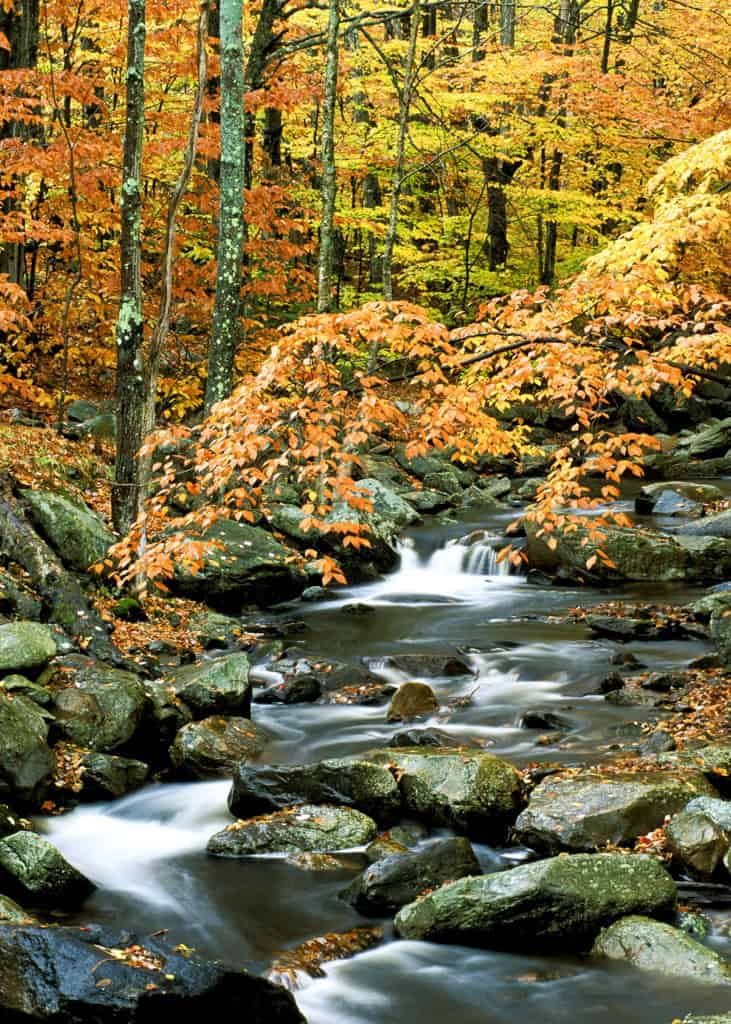
I have been getting a lot of questions about how Vermont is going to be this fall. People are contacting me asking what effect tropical storm Irene will have on the October photography season. My answer is: none, the storm will have no lasting effect what so ever. The odd thing about Irene was that in Vermont there was almost no wind so the forests, meadows, mountainsides, vistas are all in great shape and look as they should. Of all the quaint towns, beautiful streams and wonderful covered bridges in the state there are a very few that have been effected. By October I expect all the roads you might travel will all be long open as will every inn and restaurant. As far as the color goes, who knows? It is much too early to predict what kind of fall color season we are going to have. I can say that it has been a great growing season here in New England so that means…I don’t know! Who does? The point is that the Irene won’t have any effect on your photography. That also means that if things don’t work out you can’t blame her, or it, or she, or that or…never mind. Don’t change your plans and don’t listen to the news anymore, just come to Vermont and have a great time!
So I’ve been thinking…

So I’ve been thinking, which usually means that I have been thinking odd thoughts. I’ve been thinking about the role collaborators have played in my career and how I have greatly benefited from them. Over the last 25 plus years I have collaborated on major projects with John Shaw, Wayne Lynch, Bill Fortney, Bruce Morrison, Rod Barbee, Jeff Wendorff, Scott Rouse, Scott Graber and Brenda Berry. Everyone of these people has greatly enhanced the project I was working on and has greatly furthered my career. A good collaborator encourages, cajoles, critiques, questions and, if needed, berates to get the absolute best out of you. And in my case, they also keep me in chocolate, running shoes and crosswords. Of course occasionally, they also give me a heart attack but, really, its a small price to pay for a great project. So you are thinking, what has this got to do with me? Remember, a collaborator is just a fancy name for a photo buddy. Not just a friend but someone who thinks the way you do and appreciates the things you do. The difference between a collaborator and a photo buddy is that there is a common purpose involved, in other words, a project. And the difference between having a project or a purpose to your photography and just going out and shooting random images is the difference between fine chocolate and a rich mud. So go out and either find a photo buddy or acknowledge your photo buddy and then think of something you both can work on. A calendar? A book of seasons? Working portraits? Colors of your area? Hidden places? A photographer’s guide? It doesn’t matter what you choose, just choose something. As soon as you do you will realize the benefits of working closely with another photographer and then you will soon also realize the joys of working together. Oh, and your photography will great improve. So, tell me, why are you photographing all by yourself?
A Tad Wet Here

Vermont has been in the news lately. Yes it was wet here last weekend. Here in Danby we got about 7″ of rain. Yes, there are many roads and bridges that were washed out and yes travel is a bit inconvenient but this is Vermont and we don’t let any stinking rainy day dampen our spirits! Just another reason to get out the tractor or excavator or shovel and get some work done…no big deal. That being said, for all of you who are thinking about coming up to Vermont to photograph the fall colors, this storm will have no effect on your success. And for all of you especially prescient photographers who have signed up for my workshop the storm will have no effect on the workshop. All my sites are good to go and the farm and my fields are in fine shape. In fact, it may keep part of the annoying common and vulgar horde away if the memory lingers. I’ll throw in a favorite fall color shot just to tweak your interest. Enjoy!
Sometimes you get lucky

Middle of the day, August, on the beach, needing shots, light is terrible. That just about wraps up my summer photography. But I can’t just walk away, I have got to get some images for the book. So what do you do? I have two choices the way I see it: either be grumpy and leave and curse the photo gods for their cruelty or wander around and praise those same gods and hope they will pass something great your way. Just for the record, there is nothing wrong with being grumpy. But every so often something happens and I get lucky. Of course it helps to pay attention to everything that is happening around you and be always ready to shoot but luck plays the biggest part. I was on the beach in Maine, mid-day, light awful in desperate need of summer beach shots. looking around I saw a little boy running up and down a sandy path to the beach playing a game with his dad. I walked over, asked his dad if I could take his son’s picture and blasted away. I got one chance, on run before the boy stopped. I kneeled down to his eye level, put the autofocus point on the boys chest and blasted away at 8 frames a second. 40 images later the shoot was over and I went back to the car happy to have gotten a shot. These are my favorite two images. I love his joyful expression and his little running body. But I really love that I don’t have to go back at mid-day and try for more shots.
Photographing Lighthouses

Since we are on the topic of lighthouses I thought I would share four suggestions on how to get your best shots. These may seem obvious to you now but when you are out in the thick of battle some things become a bit less obvious and your composition will suffer. First- If you are doing a grand scenic shot choose a composition that includes water (and rocks if they are present). A photo of a lighthouse without water removes any context from the image. Lighthouses are where they are to protect boats (which float on water) from shallows and rocks. So by including both water and rocks (or whatever boats need protection from) in your composition you are telling the complete story of the lighthouse. Second- Always wait for the light in the lighthouse to appear to push your shutter. A lightless lighthouse looks dead and forgotten but with the light visible the lighthouse looks strong and alive and ready to warn away passing ships. All lighthouses have a cadence to their lights which makes the appearance of the light predictable. Just count the seconds of the interval a couple of times and be ready to shoot when the next interval comes around. There are some lighthouses where the light is never visible (its shielded) to people on land. For these I try to pick a time and viewing angle that puts the rising or setting sun directly behind the glass crown of the lighthouse. This illuminates the lighthouse and nicely animates it. Third- Shoot at twilight. Twilight is the time of day 45 minutes before sunrise and 45 minutes after sunset. During this time the sky gets to be a beautiful cobalt blue and there is just enough light to show details in the landscape. Everyone always shoots lighthouses at sunrise or sunset but I think twilight is better. Besides, twilight always happens no matter the weather but sunrise and sunset are very temperamental. And finally- Rather than taking the same old, same old shot look for some other way to photograph the lighthouse. Is there a puddle nearby that might hold a good reflection? How about a window for a reflection? Have you thought about doing just a piece of the lighthouse- the top or window or from inside? Are there grasses nearby that could act as a foreground or other buildings that could be used in your composition? How about a different time of the year? during a winter storm? On a clear starry night? Lighthouses are wonderful subjects to photograph but don’t always go and try to do the same thing each time. Try something different, you may be surprised at what you get.
Favorite New Image

I have been traveling to Maine a lot lately getting images for my new “Memories of the Maine Coast” book. Summer is a tough time to photograph along the coast because the light is pretty dreadful between 9am and 4pm. This means I am up very early and very late and then do very little for most of the day. I guy can eat only so much ice cream! Portland Head Lighthouse is said to be the most photographed place on the coast and I can’t disagree. I have been there on some days when there are several bus loads of people swarming the place. I have also had terrible luck photographing there in the past. All my previous times I have been skunked by very mediocre light but finally, on this last trip I got a nice enough sunset and some good wave action and finally got a pretty nice shot. I won’t be the best shot I’ll ever get of Portland Head but for now it is my best. Hope you like it.
Fall Acadia Workshop

I wanted to let you all know that there are still a few spots left on my Fall Acadia Workshop (October 19-23) on the wild and wonderful coast of Maine. I am doing this workshop with my great friend and enthusiastic teaching partner, Brenda Berry. Those of you who know Brenda will be relieved that she is there to soften the blow of my hideous personality and those who don’t know Brenda will be just plain thankful. Acadia National park is the best place for photographers on the east coast and October is the best time of the year to be in the park. While some may think the dates are late to catch the peak color, because of the ameliorating effect of the Gulf of Maine peak color is delayed along the coast. these dates should be just about perfect. And while the colors of the New England forest will be wonderful the colors of the harbors and the colorfulness of the lobstermen will be just as great. The book on lobstering and lobstermen that Brenda and I just completed came out in June and we are excited to share our favorite places and characters with you. Remember, Brenda and I will not be taking pictures during the workshop, all our attention will be focused on you (whether you like it or not!) so not only will you get some magnificent images you will also learn a great deal and grow as a photographer. Does it get better than that? If you have any questions about this workshop I will be glad to answer them for you. If you send me dark chocolate I will be glad to declare you an accomplished and truly gifted photographer. If you sign up for this workshop and send me dark chocolate I will extoll your virtues to all who breath and give you a free book that Brenda and I will sign (as soon as I get the chocolate off my fingers). If you insist on just signing up and not giving me dark chocolate I can’t be held responsible for anything that might happen. It hasn’t been pretty in the past. Its a great workshop at a great location at the best time of the year with at least one great instructor. That’s not so bad, is it? So sign up, you can regret it later. To put your name on the list for this workshop (despite what you have just read) contact Santa Fe Workshops 505. 983. 1400. They’ll understand your hesitation. [nggallery id=12]
The Clean Underwear Crowd

So I have been thinking a lot about deleting lately – deleting, being deleted, not being deleted- the standard stuff. Don’t know what has come over me but it seems to be on my mind recently. It might be because in my last couple of workshops I have heard some amazing stories by non-deleters. Yes, that is right, non-deleters and you know who you are! Non-deleters are those who never delete anything as well as those who do a very cursory editing job and delete all the really obviously awful images but then stop never to return. Either way the result is a mishmash of images that span the spectrum from hurray to horrible and are far more unusable than they are useable. One very good photographer I had a workshop had gone on a long international trip a couple of years ago and had not yet really begun to edit his images. Two years and not yet any deleting! What is he waiting for? I also have a great friend who still hasn’t finished editing her pictures from the Galapagos trip she took four years ago or the Alaska trip she took two years ago! And this is not to mention all those students who tell me that they haven’t quite gotten around to working on (deleting!) their images from the last shoot they did. Hundreds and thousands of images just sitting around forgotten, some of which are great but most of which aren’t. Am I the only one not running a half way house for bad, unwanted images? Here are some of rules for you non-deleters on editing images: 1. Just because you took a bad shot doesn’t make you a bad person. 2. It doesn’t get any easier the longer you wait. 3. If they were bad then, they are bad now and they will still be bad later. 4. Unlike wine, focus, composition and exposure don’t improve with age. 5. Proximity to new better shots doesn’t improve old bad shots. 6. If you can’t decide no one will care which one you pick. 7. If you don’t want to look at an image, we really don’t either. 8. If you think it might be bad, so do we and we are sure. 9. If you like only a small part of your picture the large part is dreadful. 10. Nirvana can only be reached through dispossession (deleting!). So what is the hold up? Glad you asked. I think most people would rather be out taking pictures rather than in working on them. This is a good thing but this desire must be tempered. If you don’t spend some time editing your images your collection of shots will be useless; you won’t be able to find the shots you want, the shots you do find will not be your best and you will forever be frustrated. Here is my rule for deleting: Every image I keep I am happy and proud to show people. I identify my best images of a scene, a shoot, a subject or a circumstance and I get rid of all the rest. I am only going to show or use my best ones, why would I keep the others? I think this is what happens most of the time. You go out and spend some time taking wonderful pictures, at least what you think are wonderful pictures. Then when you come home you look at what you shot on your computer and you are disappointed- they aren’t as good as you thought they would be. So you go through and skim the very best, process them and then stash them away for later use. But you never go back to the great vulgar hoard of images you took because you are disappointed in them and you would rather not be reminded, thank you very much! You do this for a few of months and all of a sudden it’s a year and before you know it you are 4000 images behind! Yikes! 4000 might as well be 4 million or even 4 billion, you’ll never get through them so you give up and shoot some more vowing never to look back at the mountain of images threatening to bury you and your computer. Here’s another rule: if you have already filled several terabytes of storage with your images you haven’t quite mastered the subtle butchery of deleting. How am I doing so far? Let me try to readjust your thinking on all this. First, when you initially look at your images on your computer you are looking at them unprocessed. This means that their potential is unrealized. Taking a picture is the process of collecting data, that is all. Just as in the old film days, these pictures must be processed. This is where Lightroom or Aperature or whatever program you use comes in. If you don’t process your images they will always be less than what you thought and you will forever be disappointed in the pictures you take. Second, when you first look at your images go through and get rid of all the obviously bad ones. This should be a very quick and efficient process. If it is not you need to take a class with Scott Rouse of LightroomLab.com to learn how to do this. Then go through and pick your favorites, the ones you really like. Then go through and do it again. Don’t do any processing yet, just pick the images that speak to you or sing to you or chorus to you. Any images that remain, and there should be plenty, throw into the trash and say ‘bye-bye’, ‘good riddance’, ‘hasta lumbego’, ‘ta-ta.’ Now you can go through and process the keepers, keyword them and do whatever you do to keep your images organized. But do this only for the ones you know you are going to keep. Don’t bother with the trashers, they are about to be history. This technique also works for